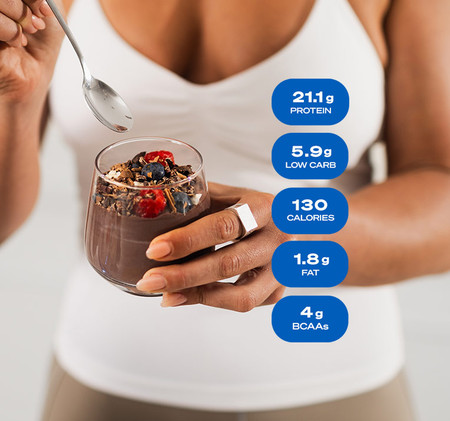
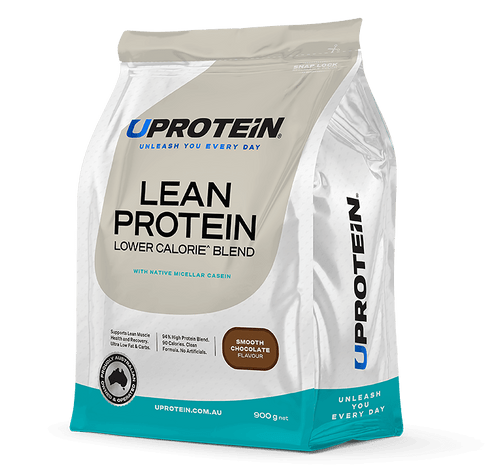
HIGH PROTEIN MOUSSE CUSTARD
Refine your product selection below
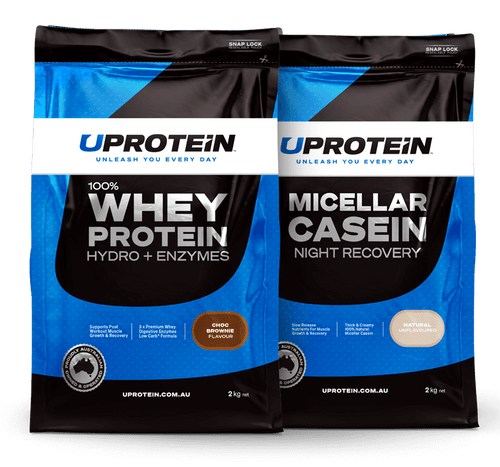
Enhance your muscle recovery and growth with our premium Casein Protein, specially formulated for sustained nourishment. Rich in essential amino acids, it's designed to provide a slow releasing source of high quality protein, perfect for overnight muscle repair or topping up your protein between meals. Our Casein Protein is available in both single ingredients and blended into formulations, giving you a smooth, creamy shake you can enjoy as is or blend into your own recipes.
Incorporate Casein Protein into your nighttime routine or use it as a convenient meal top up to help you stay in muscle growth phase for longer. Read on below for more on how casein compares to whey, where our casein comes from and answers to our most common casein protein questions.
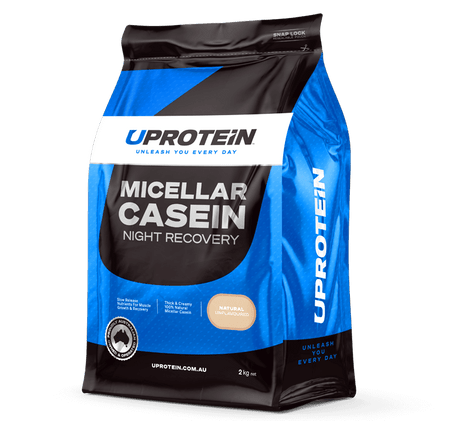
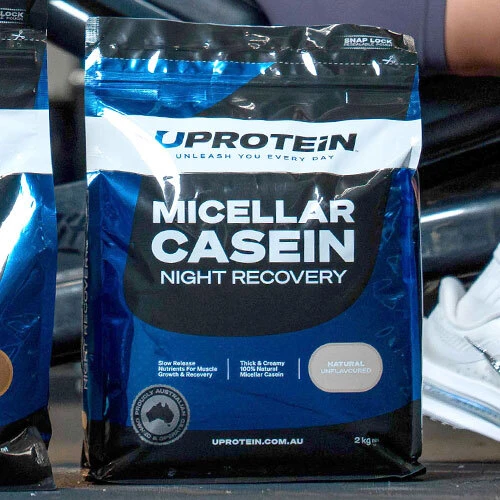
Uprotein's Micellar Casein Night Recovery is a slow digesting, high quality protein sourced from fresh Australian dairy, designed to deliver a steady release of amino acids over several hours. It's a simple way to support overnight muscle repair or fill the gap between meals when you need sustained nourishment rather than a fast hit of protein. Blended and packed in our HACCP certified facility, with fast, reliable shipping Australia-wide.
Casein and whey are both proteins found naturally in milk, but they behave very differently once you drink them. Whey is digested quickly, causing a fast spike in amino acids in the bloodstream, which is why it's popular post workout. PubMed Studies how Casein, on the other hand, forms a gel like structure in the stomach that slows digestion, releasing amino acids gradually over several hours rather than all at once.
This slower, sustained release is what makes casein especially well suited to periods where you're not eating for a while, overnight being the obvious one. If you're deciding between the two, our guide to protein and muscle recovery breaks down how whey and casein each support recovery in different ways and our Whey Protein range covers the fast digesting side of the equation.
Our Micellar Casein is made using native micellar casein sourced from fresh Australian dairy, produced at our own dairy processing facility in Shepparton, Victoria. Using a gentle filtration and low temperature drying process helps preserve the casein's natural, non-denatured protein structure, the form associated with its slow, sustained release of amino acids. It's naturally rich in branched-chain amino acids, including leucine and is also a good source of calcium.
The idea of "slow" and "fast" proteins comes from foundational research comparing how casein and whey are absorbed and used by the body. In a widely cited human trial, researchers found that whey produced a sharp, short lived rise in blood amino acids, while casein produced a lower but much more prolonged plateau and reduced whole-body protein breakdown more than whey did over the same period. In practical terms, this is the science behind why casein is commonly used before bed or during longer gaps between meals, when your body isn't taking in protein from food for an extended stretch.
A typical serve is around 30–40g, most commonly taken 30–60 minutes before bed to allow the slow release effect to work overnight. It can also be taken between meals on days when you have a longer stretch without food. Because it mixes into a thicker, creamier shake than whey, it's best shaken or blended thoroughly with water or milk. For more general guidance on daily protein targets, see our guide to choosing the right protein for your goals.
READ MORE
Both come from milk, but they digest at very different speeds. Whey is absorbed quickly, causing a fast rise in amino acids, ideal after training. Casein digests slowly, releasing amino acids steadily over several hours, which is why it's more commonly used before bed.
Most people take casein 30-60 minutes before bed so the slow release works through the night. It's also a good option between meals when there is a longer gap without food.
Many people find a slow digesting protein like casein helps them feel fuller for longer between meals, since it releases amino acids gradually rather than all at once.
Yes, casein is a dairy protein and does contain lactose, however it low lactose. Consider a plant based protein if lactose intolerance is a concern
Australian dairy at its own processing facility in Shepparton, Victoria Australia, using a gentle filtration process designed to preserve casein's natural, slow release protein structure.
Our FAQ page provides answers to the most commonly asked questions about our products, payments, deliveries, and more.
SELECT A TOPIC
VIEW ALL QUESTIONSOur FAQ page provides answers to the most commonly asked questions about our products, payments, deliveries, and more.
SELECT A TOPIC
VIEW ALL QUESTIONS