HOW TO READ PROTEIN SUPPLEMENT LABELS
Posted by UPROTEIN on

Dr Muriel Moes | Accredited Dietitian
9 mins
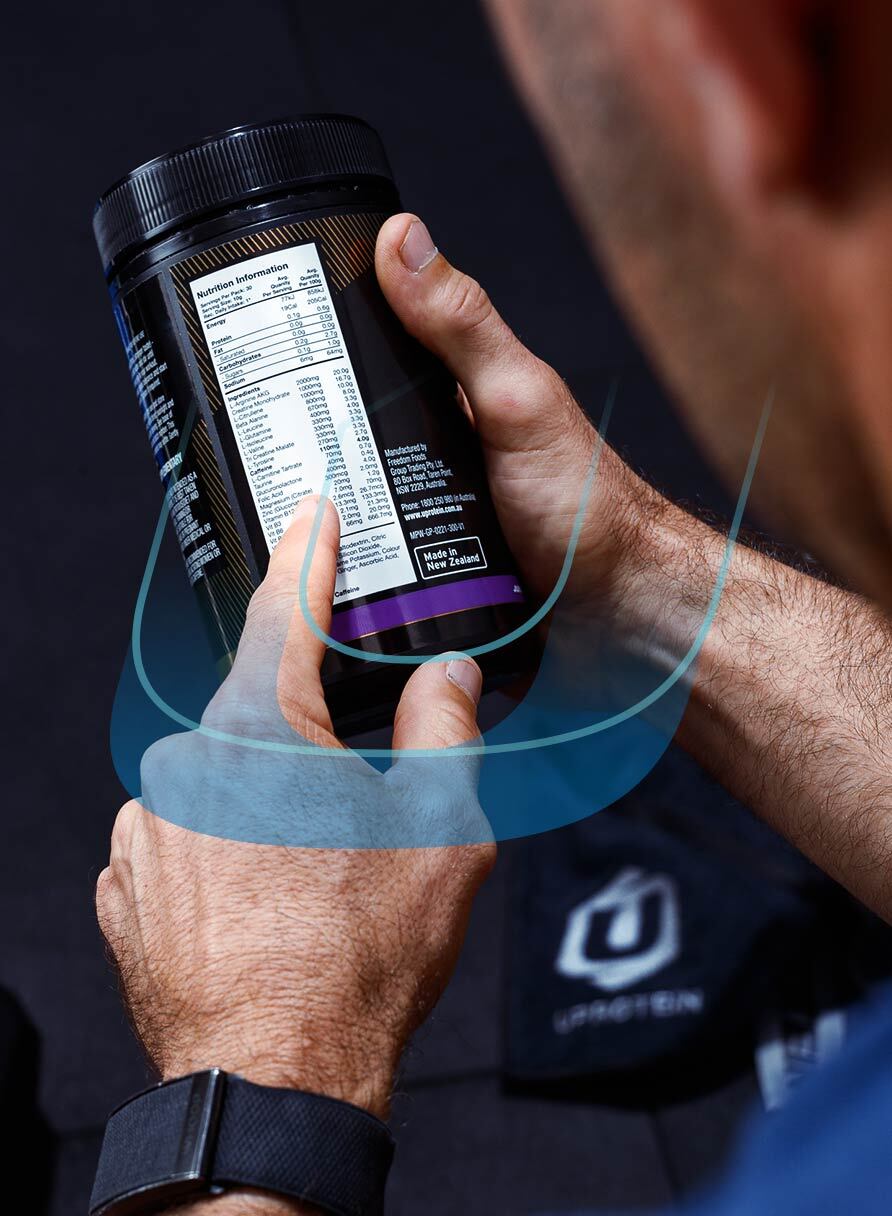
For the smart lifter, the back of a protein tub is far more important than the front. While flashy packaging often makes big promises about muscle growth, recovery and performance, the nutrition panel and ingredient list reveal the true value of what’s actually inside.
Understanding how to read a supplement label helps you cut through the marketing and see exactly what you’re paying for. It shows you how much real protein you’re getting per serve, where that protein comes from and whether the product is packed with beneficial ingredients or padded out with cheap fillers or unnecessary additives.
Once you know what to look for, labels become a powerful tool. You can quickly compare products, identify higher quality formulas and avoid supplements that rely more on clever branding than nutritional value. In a category where two tubs can look almost identical on the shelf but deliver very different nutritional quality, learning how to decode the label ensures you’re fuelling your body with ingredients that genuinely support training, recovery and long term health.
Why Protein Labels Can Be Confusing
Supplement labels can sometimes be confusing. Brands may use technical language or list nutrients in different ways, which can make it harder to understand exactly what you are consuming. At Uprotein, the focus is on evidence backed nutrition and clear labelling so you can see what is in your supplement without unnecessary extras.
One of the most common things to look for is the difference between serving size and the actual amount of protein in that serving. The “protein per serve” section tells you the total grams of protein in one recommended scoop.
- Example: Uprotein 100% Whey – Unflavoured has a recommended serving size of 40g.
- Within that 40g serving, 32g is protein.
- To compare products accurately, check the protein per 100g column on the nutrition panel.
In this case, Uprotein 100% Whey – Unflavoured contains 80g of protein per 100g, meaning the product is 80% protein. This provides a clearer way to compare purity across different protein powders.
Tip: A larger scoop size does not always mean more protein. Often it simply means the product contains more fillers, flavouring or added carbohydrates.
COMPARE PROTEIN POWDERS
Complete vs. Incomplete Protein Sources
A complete protein contains all 9 essential amino acids that your body cannot produce on its own. These are:
- Histidine
- Isoleucine
- Leucine
- Lysine
- Methionine
- Phenylalanine
- Threonine
- Tryptophan
- Valine
Animal protein sources such as whey protein and casein are naturally complete and provide a full amino acid profile. While some plant proteins can be incomplete in isolation, modern blends combine multiple sources such as pea, rice, and faba bean to create a complete amino acid profile. TIP Look for plant based protein blends that ensure all essential amino acids are present to support muscle repair.
Amino Acid Profiles and the Leucine Threshold
The quality of a protein is often determined by its amino acid profile, especially the Branched Chain Amino Acids (BCAAs): leucine, isoleucine and valine. These amino acids play an important role in muscle repair and recovery after exercise.
Leucine is particularly important because it helps trigger muscle protein synthesis, the process your body uses to repair and build muscle after training.
Research suggests that around 2–3 grams of leucine per serving can help maximise this muscle-building response. High quality protein sources such as whey protein isolate are naturally rich in leucine, making them very effective for post workout recovery.
Tip: When reading a protein label, check the amino acid profile listed per 100g. If muscle recovery and growth are your goal, pay close attention to the leucine content.
Watch for Added Sugars, Flavours and Fillers
Some protein powders include extra ingredients to reduce costs or improve texture, but these additions may not contribute to muscle recovery or performance. It’s important to check the ingredient list to understand what else is included in the formula.
When reviewing a label, watch for:
- Artificial flavours or colours – sometimes used to mask lower quality ingredients.
- Fillers that add calories but little nutritional value – such as dextrose, tapioca, gluten or certain starches.
- Thickeners and additives – including gums or added fibres that may be used to bulk out the formula.
High performance protein formulas focus on quality protein and functional ingredients. Many Uprotein products include digestive enzymes such as protease, which help the body break down and absorb protein more efficiently.
Ingredients like carbohydrates, fibres and thickening agents are not necessarily harmful, but they are typically more suited to products designed for higher calorie intake, such as mass gainers or meal replacement formulas where slower digestion and added energy are part of the intended nutritional profile.
Protein Source Transparency and Blends
A good supplement label clearly states the protein sources used in the formula. Common sources you may see include whey protein isolate, whey protein concentrate, hydrolysed whey, casein, milk protein concentrate, milk solids, skim milk or soy protein.
Different protein sources digest at different speeds, which affects how they support recovery:
- Whey protein (concentrate, isolate or hydrolysed) – fast digesting and ideal after training when muscles need amino acids quickly.
- Casein – slow digesting, providing a steady release of protein over several hours to support recovery between meals or overnight.
Many protein powders use protein blends, which combine multiple protein sources to provide both fast and sustained amino acid release. When properly formulated, blends can support both post-workout recovery and daily protein intake.
Another important tip when reading labels is that ingredients are listed in descending order by weight. This means the first ingredient makes up the largest portion of the product. In a quality protein powder, the main protein source should appear first on the ingredient list. If fillers, carbohydrates or additives appear before the protein source, the product may contain less actual protein than the marketing suggests.
Allergen Statements and Dietary Claims
Ensuring a supplement aligns with your dietary needs is important for both long term health and training performance. Always check the label for clear allergen information, particularly for common allergens such as dairy, gluten free or soy.
Under Australian food labelling rules and the Plain English Allergen Labelling (PEAL) requirements, allergens must be clearly declared and are typically bolded in the ingredient list. This makes it easier to quickly identify ingredients that may trigger an allergy or intolerance.
When reviewing a supplement label, look for:
- Bolded allergens in the ingredient list (for example milk, soy or gluten, containing cereals).
- An allergen summary statement that clearly lists which allergens are present in the product.
- “May contain” statements that indicate possible cross contact during manufacturing.
A “may contain” statement does not mean the ingredient is part of the formula. It simply means the product is manufactured on equipment or production lines that may also process other ingredients such as milk, soy or nuts. This declaration is included as a precaution for people with severe allergies, even though the ingredient is not intentionally added to the product.
Beyond allergens, it is also helpful to consider the supporting nutrients in a formula. Adequate protein intake helps support muscle maintenance and normal hormonal function, while electrolytes such as sodium and potassium play an important role in hydration and muscle function, particularly around training and recovery.
Identifying Quality and Avoiding Marketing Hype
The smart lifter looks beyond flashy marketing claims and focuses on real indicators of quality. A well formulated supplement should list its ingredients, be developed using evidence based nutrition and be produced under quality HACCP controlled manufacturing standards.
When reading supplemement labels to choose a protein powder, focus on the fundamentals:
- High quality protein sources with strong amino acid profiles.
- Clear ingredient lists without unnecessary fillers.
- Clear nutritional information that allows you to compare protein content and purity.
Consuming enough quality protein each day supports muscle repair, recovery and training adaptation. Adequate protein intake can also help reduce the severity of delayed onset muscle soreness (DOMS) and support consistent progress from your training.
Ultimately, the biggest driver of results is consistently meeting your daily protein requirements with high quality nutrition. By learning how to read supplement labels, you can confidently choose products that genuinely support your training goals and ensure your supplement spend is an investment in your results.
At Uprotein, our range is designed with this philosophy in mind, delivering high protein, low filler formulas that support your training, recovery and everyday performance. Browse our range or reach out to our team if you have any questions about choosing the right product for your routine.