Creatine Without the Hype: What Actually Matters
Posted by UPROTEIN on

Dr Muriel Moes | Accredited Dietitian
8 mins read
Creatine is one of those supplements that’s been around for decades and for good reason. It’s simple, well researched and consistently effective when used properly. Yet despite its popularity, creatine still attracts plenty of confusion, especially for people new to training or supplements.
So let’s clear it up.
How does creatine work?
Is Creatine safe?
What are the real creatine benefits?
And why is creatine monohydrate still considered the gold standard?
How Creatine Works (And Why It Improves Performance)
To understand how creatine works, it helps to look at what’s happening inside your muscles during training.
When you lift weights, sprint, or perform short bursts of high intensity exercise, your body relies heavily on ATP (adenosine triphosphate) as its primary energy source. The issue is that ATP is depleted very quickly.
Creatine helps by replenishing ATP at a faster rate. In practical terms, this means:
- You can squeeze out an extra rep
- Maintain intensity for longer
- Produce more power during repeated efforts
Over time, those small performance improvements compound and that’s where most of the well known creatine benefits come from, including:
- Increased strength and power output
- Improved high intensity training performance
- Better training volume and consistency
- Support for lean muscle growth over time
Creatine isn’t a stimulant and it’s not doing anything unnatural. Your body already produces creatine and it’s naturally found in foods like red meat and fish. Supplementing simply ensures your muscle stores stay optimised, especially if you train hard.
What About the Creatine Loading Phase?
You may have heard about a “loading phase,” where higher doses of creatine are taken for 5–7 days before dropping to a maintenance dose.
This approach can help saturate muscle creatine stores a little faster, but it’s not essential. You’ll still reach full saturation by taking a consistent daily dose from the start, it just happens more gradually.
In short:
- Loading is optional
- Consistency matters more than dose timing
- Long-term results are the same either way
For a full breakdown on Creatine Monohydrate dosage and loading phases see our product page.
Creatine Monohydrate vs Other Forms of Creatine
There’s no shortage of creatine variants on the market. HCL, buffered creatine, ethyl ester, liquid creatine, creatine gummies, creatine blends and more.
Despite the marketing claims, creatine monohydrate powder remains the most reliable and well researched form available.
Why creatine monohydrate stands out:
- It’s been studied extensively over decades
- It consistently improves strength and performance
- It’s well absorbed and stable
- It delivers results without unnecessary complexity
Most alternative forms exist to “fix” problems that creatine monohydrate doesn’t actually have, often at a higher cost and without stronger evidence. That’s why athletes, coaches and sports nutrition professionals continue to rely on monohydrate as their first choice.
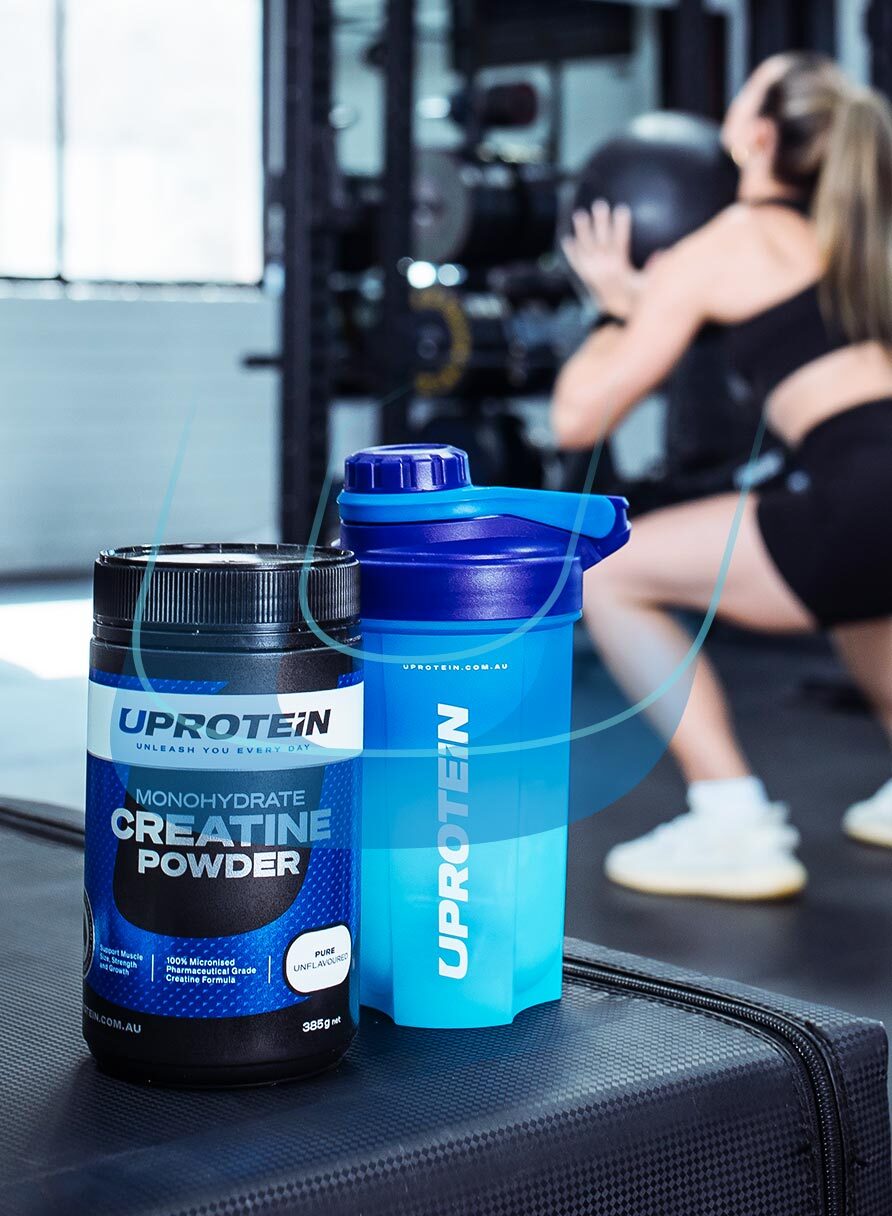
CREATINE MONOHYDRATE POWDERS
Available Creatine Monohydrate products in the Uprotein range.
Creatine and Water Retention – Myth or Reality?
This is one of the most common misconceptions around creatine.
Yes, creatine increases water content inside muscle cells, but that’s intracellular hydration, not bloating or unwanted water retention under the skin.
In fact, increased muscle cell hydration is generally a positive thing. It supports:
- Performance
- Recovery
- Muscle fullness and function
When people experience bloating, it’s usually due to:
- Excessive dosing
- Poor mixing
- Individual digestive sensitivity
Used correctly, creatine does not cause puffiness or a “soft” look.
How to Take Creatine Properly
Creatine is refreshingly simple.
Recommended dose: 3–5 grams per day
For more details creatine monohydrate dosage gudiance visit our product page.
Timing: Timing isn’t critical but consistency is. That said, many people prefer taking creatine:
- Post workout with a protein shake
- With a meal containing carbohydrates
- At the same time each day to build the habit
Creatine powder mixes easily with water, juice, or protein shakes. Just ensure it’s fully dissolved and that you’re staying well hydrated throughout the day.
There’s no need to cycle creatine on and off unless you personally prefer to. Long term daily use at recommended doses is well supported by research.
Where Creatine Fits in a Smart Supplement Stack
Creatine works best when it supports a solid foundation: structured training, enough calories, adequate protein intake and proper recovery.
That’s where product quality matters.
A clean, well sourced creatine ensures you’re getting exactly what you expect pure creatine monohydrate, without fillers or unnecessary extras.
At Uprotein, the approach is simple: proven ingredients, backed by science, produced to high quality standards and independently tested. If your goal is to support strength, performance and long term training progress, creatine remains one of the most reliable supplements you can add to your routine.
No hype. No shortcuts. Just results you can actually build on.