Best Low Calorie Protein Powder: A Complete Buyer's Guide
Posted by UPROTEIN on

Dr Muriel Moes | Accredited Dietitian
9 mins read
A low calorie protein powder sounds simple enough: fewer calories, more protein, job done. In reality, it's rarely that black and white.
Some products are genuinely lean, well formulated and built to give you a strong hit of protein without dragging along a bunch of extra calories. Others just look lean on the front of the label, because the serving size is small, the protein content is only average, or the formula has been built more around marketing than actual nutrition. That's why it pays to look past the front of the label and check what's really going on in each serve.
The best low calorie protein isn't automatically the one with the lowest number on the label. It's the one that gives you a genuinely useful amount of protein, suits your goals, digests comfortably, tastes good, and is something you'll actually reach for day after day.
Start With the Protein Per Calorie Ratio
If you're comparing low calorie protein powder options, the single most useful number to look at isn't the calorie count on its own, it's the protein per calorie ratio. A product can look "light" at first glance, but if it only delivers a small amount of protein per serve, it's not doing you many favours. On the flip side, a product with slightly more calories but a much higher protein content can end up being the smarter pick, especially if your goal is to get more protein into your day without piling on extra energy.
Ideally, you want a product that gives you a meaningful serve of protein without loading in unnecessary calories from added sugars, fats, carbs, or filler heavy ingredients. This matters most if you're tracking macros, managing a calorie deficit, or simply trying to get more protein in without turning every shake into a full meal.
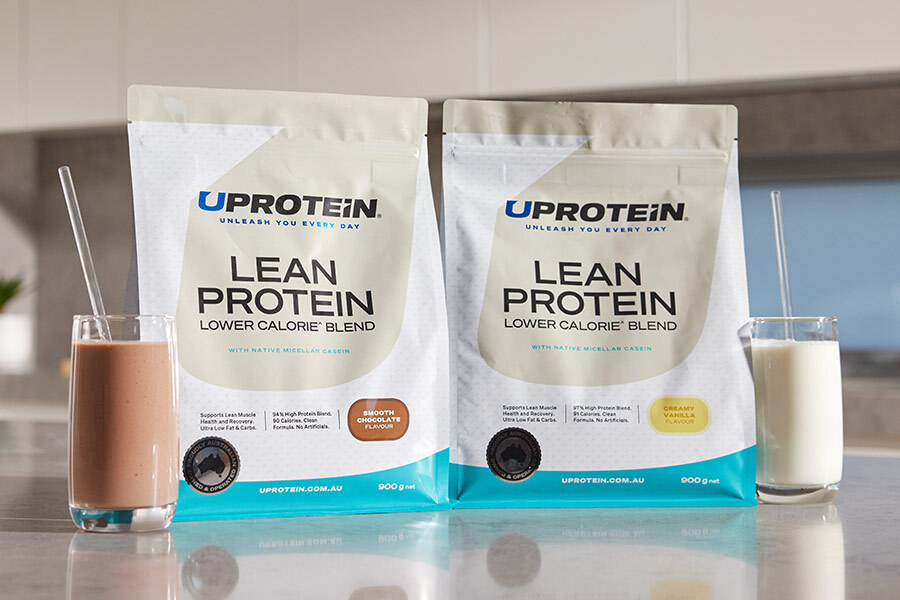
A good protein powder will usually give you a high amount of protein for a relatively low calorie cost, which is part of why whey and casein remain such a popular choices for anyone chasing lean, convenient protein. Uprotein's Lean Protein Low Calorie Blend is a good example of this in practice, sitting at 20g of protein for around 91 calories per serve, which works out to roughly 82% protein by weight, yes 82%!
Protein per calorie ratio is calculated by dividing the grams of protein per serve by the total calories per serve, then multiplying by 100 to show how much protein you get per 100 calories. For example, Uprotein Lean Protein Vanilla provides 20.6g of protein and just 91 calories per serve, delivering an impressive 22.6g of protein per 100 calories making it an efficient way to maximise protein while keeping calories low.

Check the Sugar Content
Sugar isn't something to be afraid of, but it can add calories fast, so it's worth checking how much is hiding in each serve if you're after a leaner protein powder.
Some brands lean on extra sugar to boost flavour or texture. That might suit some people, but it's not ideal if you want something you can use daily without your calories creeping higher than expected. The goal isn't to strip out flavour altogether, a protein powder still has to taste good, but the bulk of the calories should be coming from protein, not from added sugar.
A well designed product should let you enjoy the flavour without every shake tasting (or costing calorie wise) like dessert. This is exactly the gap products like Uprotein's Lean Protein Blend are built to fill, sweetened naturally with under 1g of sugar per serve, so you get the taste without the sugar hit.
Watch for Unnecessary Fillers
Not every extra ingredient is a red flag. Some are there for texture, mixability, flavour, or digestion and those additions genuinely improve how enjoyable a protein powder is to use.
The problem starts when a formula is padded out with ingredients that don't add much value, make the label harder to read, or quietly dilute the amount of protein you're actually getting per serve. Clean formulation doesn't have to mean plain or stripped back, it simply means the product has a clear purpose, an easily identifiable protein source and an ingredient list that makes sense at a glance.
If you're using protein powder most days of the week, that kind of clarity starts to matter a lot more than it might seem at first. You can see this approach on the Uprotein Quality page, where formulation standards across the range are explained in more detail.
Ingredient Quality Matters
When people search for the best low calorie protein, it's tempting to focus on calories first. But ingredient quality deserves just as much attention, if not more.
A good protein powder should be upfront about what type of protein it uses, how much protein you're actually getting per serve, and what else has gone into the formula. It shouldn't need exaggerated claims or flashy wording to sound better than it is, the nutrition panel and ingredient list should be doing most of the talking on their own.
For everyday use, reliability wins: solid protein content, good taste, easy mixability, and a formula that agrees with your body and your routine. That combination is usually the difference between a product you try once and one you actually keep buying.
Whey vs Collagen vs Plant Protein
Different protein types suit different goals, so it helps to know what you're actually comparing before you choose a product.
- Whey protein is one of the most popular options because it's generally high in protein, relatively low in calories, easy to mix and useful for supporting muscle recovery and daily protein intake. If you're specifically after a whey protein, this is usually the most straightforward place to start.
- Collagen is a bit different. It can be genuinely useful for specific goals, particularly skin, hair and joint support, but it shouldn't be treated as a direct swap for a complete protein powder if muscle support is your main goal. Collagen has a different amino acid profile to whey, so it doesn't offer the same complete protein profile that muscle repair and growth rely on. If you want the benefits of both, blends like Tone & Glow Protein + Collagen are worth a look.
- Plant protein can be a great option if you prefer dairy free or vegan-friendly products, though it's worth checking the protein content, texture, taste and digestibility before committing to a product. Some plant proteins are smooth and easy to use, while others can be thicker or earthier depending on the source and how the formula has been put together.
There's no single "best" option here, because the right choice comes down to your goals, dietary preferences, digestion and how you actually plan to use it day to day.
Digestion and Daily Use
A protein powder can look fantastic on paper, but if it doesn't agree with your stomach or fit naturally into your day, chances are it won't be the one you reach for consistently.
Digestion matters, especially if you're planning to use protein regularly rather than just on the odd gym day. Some people feel best with whey, others prefer plant protein or a blend and taste and texture can end up mattering just as much as the numbers on the nutrition panel. If a protein powder is hard to mix, overly sweet, gritty, or heavy in the stomach, it's far more likely to end up at the back of the pantry than in your daily routine.
The best low calorie protein powder is the one you'll actually use consistently, whether that's in a straightforward shake, blended into a smoothie, stirred through oats, mixed into yoghurt, or knocked back after training. Consistency beats the "perfect" product you never actually get around to using.
Protein Powder for Weight Loss: Keep It Realistic
Protein powder can genuinely help when you're managing calorie intake, but it's worth being realistic about what it can and can't do. It can help you increase your protein intake in a simple, controlled way, which may support fullness, help preserve lean muscle when paired with resistance training and make it easier to build balanced meals and snacks around your day. What it won't do is replace the need for a balanced diet, regular movement, decent sleep and consistency across the rest of your routine.
Used well, a low calorie protein powder for weight loss is a genuinely useful tool, particularly when it helps you make better choices more often. It's just not a shortcut on its own. If weight management is your focus, it's worth browsing Uprotein's weight management range or the dedicated weight loss collection to see the options built specifically for that goal.
How to Compare Low Calorie Protein Powders
When you're weighing up different products, don't stop at the biggest claim printed on the front of the pack. A few extra minutes checking the details will tell you a lot more about how useful the product will actually be.
- Protein per serve
- Calories per serve
- Protein per calorie ratio
- Sugar content
- Protein type (whey, casein, plant, collagen, or a blend)
- Ingredient list and clean formulation
- Digestibility
- Taste and mixability
- Value per serve, not just price per tub
That last point matters more than people give it credit for. A product isn't automatically better just because it costs more, and it's not automatically better just because it's cheaper. Real value comes from the full picture: formulation, ingredient quality, taste, serving size, and whether the product actually helps you stay consistent. Uprotein's full protein powder range lets you compare protein, calories and price per serve side by side if you want to run the numbers yourself. Click the 'compare' tab on any product page to see or checkout the comparison table below.
COMPARE PROTEIN POWDERS
Scroll through and discover calories of Uprotein protein powders.
The Bottom Line
The best low calorie protein powder gives you a strong amount of quality protein without unnecessary calories, excess sugar, or a filler heavy formulation. For a lot of people, a low calorie whey protein is the smart, simple option, while others may lean towards plant protein or a blend depending on digestion and dietary preferences. Collagen has its place for specific goals, but it isn't a substitute for a complete protein powder when muscle support is the priority.
Look for a product that's clear about what's in it, practical to digest, and easy to build into daily use, because that's what actually matters over time. The best low calorie protein powder isn't the one with the loudest claims on the label, it's the one that fits your routine and keeps you moving toward your goals.
If you want to see how this plays out in a real product, Uprotein's Lean Protein Low Calorie Blend was built around exactly this brief: 20g of protein, around 91 calories, under 1g each of sugar, carbs and fat and just four ingredients in the formula. It's worth comparing against your current tub to see how the numbers stack up. Or explore the full protein range to find the low calorie option that suits your taste, training and everyday routine.