Collagen Protein for Women: Benefits, Myths and What to Look For
Posted by UPROTEIN on

Dr Muriel Moes | Accredited Dietitian
9 mins read

If you've scrolled past collagen protein powder in your coffee, smoothie or favourite bar lately, you're not imagining it, collagen is everywhere in women's health and beauty nutrition right now. It's promised to do a bit of everything: glowing skin, stronger nails, healthier joints, you name it.
So what does collagen protein actually do, and how does it fit in alongside the protein powder you're already using?
Here's the honest answer: collagen can genuinely help, but only once you understand what it is, what it isn't, and how to choose a clean, quality collagen product.
What Is Collagen Protein, Really?
Collagen is the most abundant structural protein in your body. It's the framework behind your skin, tendons, ligaments, cartilage, bones and connective tissue, basically, it's part of your body's internal scaffolding.
As we get older, natural collagen production gradually slows down. Things like UV exposure, poor sleep, low protein intake, stress and heavy training loads can also affect how well your body maintains and repairs connective tissue.
This is where a collagen protein powder comes in. Most collagen supplements use hydrolysed collagen peptides, meaning the collagen has been broken down into smaller protein fragments that are easier for your body to digest and absorb. Once you consume them, these peptides break down further into amino acids like glycine, proline and hydroxyproline, all of which play a role in connective tissue structure. Understanding how collagen works in the body is the first step to using it well.
Collagen Protein Benefits for Women
The main collagen protein benefits come down to structural support, think skin, hair, nails, joints, tendons and connective tissue.
- Collagen for skin: used consistently, collagen may help support elasticity, hydration and firmness. It won't replace sunscreen, sleep, hydration or a nutrient rich diet, but it can absolutely be part of a broader skin support routine.
- Collagen for hair and nails: the picture here is a little more nuanced. Collagen isn't a magic hair growth powder, but your overall protein status matters for healthy hair and nail structure. A collagen supplement may help support the raw nutritional building blocks involved in stronger nails and healthier tissue overall.

Collagen can also be a smart addition for active women. Training puts real stress on your muscles, joints, tendons and ligaments. Whey and Casein protein is generally the better choice for muscle repair and growth, but collagen plays a more targeted role in joint support, particularly useful if you lift weights, run, play sport, or simply want to look after your long term joint health.
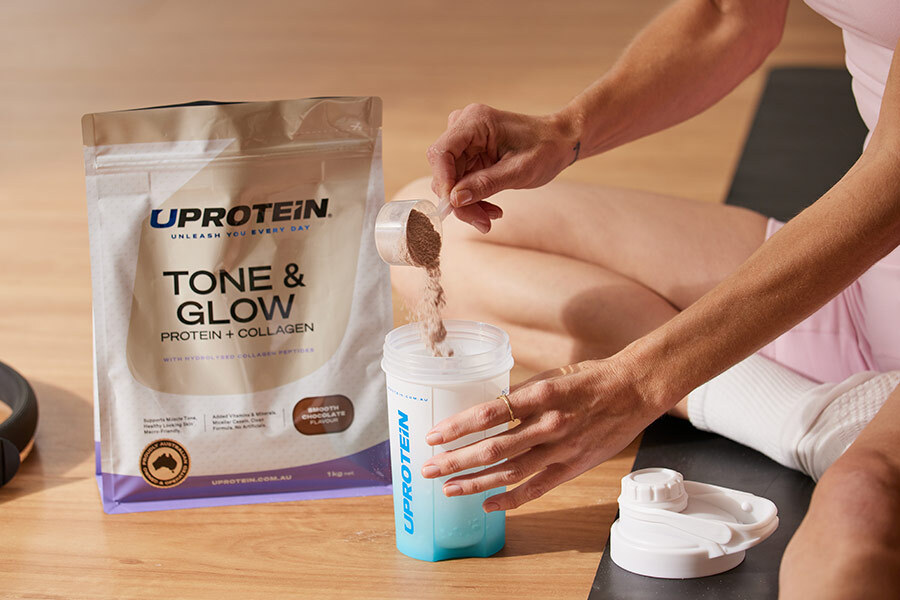
For this reason Uprotein's accredited dietitians created Tone & Glow Proten + Collagen, which combines these same quality ingredients into one natural and clean formulation^.
Collagen vs Protein: What's the Difference?
Here's something worth clearing up: collagen is a protein, but it's not the same as a complete protein powder. Whey, casein and well-formulated plant protein blends contain all the essential amino acids, making them especially useful for muscle protein synthesis, recovery and hitting your daily protein target.
Collagen has a different amino acid profile. It's rich in glycine and proline, but lower in essential amino acids, including leucine, one of the key triggers for muscle protein synthesis. In practice, this means collagen protein powder shouldn't be your main protein source if your goal is muscle growth, recovery or meeting your daily protein needs.
A simple way to think about the difference between collagen and protein:
- Use whey, casein or plant protein to help meet your daily protein needs.
- Use collagen as targeted support for skin, hair, nails, joints and connective tissue.
For most women, it's not collagen or protein, it's protein first, then collagen where it suits your goals, or simply combine them with Tone & Glow.

Common Myths About Collagen
- Myth: collagen instantly reverses ageing. It doesn't. Collagen works gradually, and results depend on consistency, overall nutrition, lifestyle and individual biology.
- Myth: collagen replaces protein powder. It doesn't. Collagen is useful, but it's not a complete protein source and shouldn't be relied on as your main daily protein.
- Myth: more collagen always means better results. Like any supplement, the goal is an effective, consistent dose — not endless scoops. More isn't automatically better.
- Myth: all collagen powders are pretty much the same. Not true. Source quality, ingredient transparency, flavouring, sugar content and processing all matter. A clean collagen product should be easy to understand from the label alone.
What Makes a Clean Collagen Product
A quality collagen product should keep things simple. Look for hydrolysed collagen peptides, clear sourcing, a meaningful protein serve and minimal unnecessary extras. Steer clear of products loaded with added sugars and artificial heavy blends. Extra ingredients aren't always bad, they just need a genuine purpose.
When you're learning how to choose quality collagen, look for a product that offers:
- A transparent ingredient list
- Hydrolysed collagen peptides
- Low or no added sugar
- Minimal fillers
- Easy mixing
- Good digestibility
- Clear serving guidance
If a product makes big promises but gives little detail, that's usually your cue to look a little closer.
How to Use Collagen in Your Routine
The good news? Collagen is easy to fit into daily life. Stir it into your coffee, smoothie, yoghurt, oats or a post training shake. Many women like taking it in the morning simply because it becomes part of an easy routine, but timing matters far less than consistency.
For connective tissue support, collagen is often paired with vitamin C, which plays a role in normal collagen formation, as simple as adding your collagen powder to a smoothie with berries, or having it alongside a piece of fruit.
It's also worth keeping the bigger picture in mind. Collagen works best when your overall protein intake is already in a good place. If you're under-eating protein, sleeping poorly and not recovering well, collagen alone won't fix that. Build the foundation first, enough total protein, resistance training, hydration, micronutrients, sleep and smart recovery, then use collagen as a targeted addition on top.
Support Your Routine with Uprotein
Collagen can be a smart addition to your nutrition routine when it's used for the right reasons. It's not a miracle beauty product, and it's not a replacement for high quality protein powder. But for skin, hair, nails, joints and connective tissue support, a clean collagen supplement absolutely makes sense.
At Uprotein, the focus is simple: practical nutrition, clean formulas and products that support real training and lifestyle goals. That's exactly why our Tone and Glow Protein + Collagen combines quality protein with hydrolysed collagen peptides and added vitamins and minerals that include iron, magnesium and vitamin C, giving you both a solid protein base and targeted collagen support in one clean formula.
Choose quality, stay consistent, and use collagen as part of a protein first approach to feeling, moving and performing at your best.