How Much Protein Do Women Need Per Day?
Posted by UPROTEIN on Jun 10, 2026

Dr Muriel Moes | Accredited Dietitian
9 min read
Let's be honest, protein advice for women can be all over the place. One moment you're told to eat lightly and keep portions small. The next, it's all about hitting a big protein number with no real explanation of why, what that number should be, or whether it even makes sense for you.
The reality is much simpler than all that noise. As a woman, you need enough protein to support muscle maintenance, recovery, appetite control and everyday health and depending on where you're at in life, healthy ageing too. The exact amount isn't a single fixed number. It's a range, and where you sit within that range depends on your body weight, how active you are, your age and what you're actually trying to achieve.
So if you've been wondering how much protein a woman should eat each day, whether you're sedentary, training regularly, working on fat loss, building strength, or navigating a life stage like menopause, this is your practical, no filter guide.
Is Protein Requirement Different for Women?
In terms of the basics, not really. Your body uses protein the same way anyone's does, repairing tissue, maintaining muscle, producing hormones and enzymes, supporting your immune system. The fundamentals don't change based on gender.
What does change is the context around those needs. Women are often eating fewer total calories than men, which can make it trickier to hit a solid protein intake without being deliberate about it. There's also a tendency for women's nutrition advice to prioritise being smaller over being stronger, which can lead to under-eating, especially when trying to lose weight.
On top of that, goals like maintaining muscle tone, supporting recovery, managing fat loss and navigating hormonal shifts at different life stages all make protein intake for women more important, not less. So while the principles are the same, women often benefit from paying closer attention, because the margin for under eating protein can be smaller.
Baseline Protein Intake for Sedentary Women
If you're mostly sedentary, the baseline recommendation typically starts around 0.8 grams of protein per kilogram of body weight per day. To be clear: that's the minimum used to cover basic needs and prevent deficiency, not necessarily the amount that'll support your best energy, appetite or body composition.
To put it in real numbers:
- A woman weighing 60 kg = around 48 g of protein per day
- A woman weighing 70 kg = around 56 g of protein per day
That might sound manageable, but in practice many women still fall short, especially when breakfast is low in protein and most intake ends up pushed into dinner. Even for sedentary women, bumping protein up slightly can help with fullness and make meals feel more satisfying. Think of the 0.8 g/kg baseline as your starting point, not necessarily your ideal destination.
Protein Needs for Active Women
Once your activity level goes up, your protein needs go up with it. If you strength train, run, do Pilates regularly, play a sport, or follow any kind of structured exercise routine, your body has an ongoing demand for repair and recovery and that means you need more protein than the sedentary baseline.
For active women, a practical range for protein per kg for women sits around 1.2 to 2.0 grams per kilogram of body weight per day, depending on what you're doing and what you're working toward:
- General fitness or a few sessions per week → lower end of the range
- Serious strength training, body composition goals or high intensity training → higher end of the range
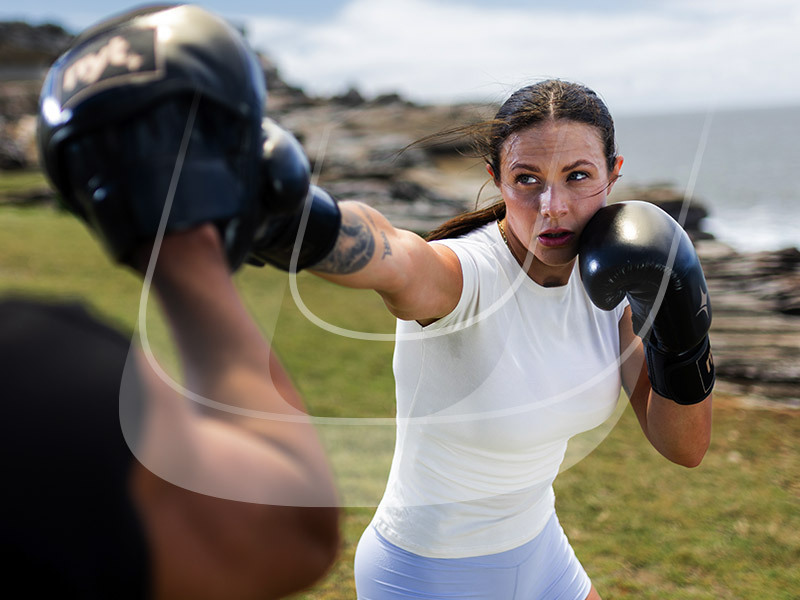
This is where a lot of active women accidentally fall short. Training increases demand, but if meals haven't shifted to reflect that, recovery can suffer, muscle soreness can drag on longer, and holding onto lean mass becomes harder. Protein doesn't need to take over every meal, but for active women, it does need to be intentional.
Protein for Female Weight Loss and Muscle Tone
"Muscle tone" is one of the most common goals we hear from women and what it usually means in practice is holding onto muscle while losing body fat. Protein is absolutely central to this because it helps preserve lean muscle during a calorie deficit. That's exactly what gives you a firmer, stronger looking physique rather than just a smaller version of yourself.
Protein also helps manage hunger. Higher protein meals tend to keep you fuller for longer, which makes protein for female weight loss not just about body composition, it makes the whole process easier to stick to without feeling like you're fighting your appetite at every turn.
For women focused on fat loss while maintaining shape and strength, protein typically needs to sit higher than the bare minimum. During a structured fat loss phase, especially when resistance training is part of the picture, somewhere around 1.6 to 2.2 grams per kilogram can be really effective. The goal isn't to eat as much protein as humanly possible; it's to keep enough in place to protect muscle, manage appetite and make the whole approach more sustainable.
Protein, Hormone Balance and Energy Availability
Let's talk about hormones because this one gets a lot of airtime and deserves a honest take. Protein plays a supporting role in normal hormonal function, but it's not a magic fix for "balancing hormones" on its own. What it does do is contribute to the nutritional foundation your body needs for recovery, tissue repair and normal physiological function.
Where protein becomes especially important is when women aren't eating enough overall. Low energy availability when your intake doesn't keep up with your training and daily needs can trigger a cascade of issues: fatigue, poor recovery, reduced performance and disruption to normal bodily processes. Protein alone won't fix that picture, but consistently low protein can make it worse.
The practical takeaway here: spreading protein consistently across the day tends to support a more stable, well fuelled body. It's not a hormone cure, but it is a meaningful piece of the puzzle.
Menopause Considerations
Menopause changes the conversation around protein and it's worth taking seriously. Muscle loss naturally accelerates with age, and the hormonal shifts that come with perimenopause and menopause can make that process more noticeable, especially if strength training and adequate protein haven't been consistent priorities.
That's why many women in midlife and beyond benefit from being more deliberate with their intake. Maintaining lean muscle supports strength, function, metabolic health and long term independence and it becomes harder to protect if protein stays too low.
For women going through or beyond menopause who are physically active and focused on staying strong, a range of around 1.2 to 1.6 grams per kilogram per day is a sensible place to start. It doesn't need to feel clinical the message is simply this: as muscle becomes easier to lose, it's worth protecting more intentionally. You've worked hard for your strength. Let's keep it.
Pregnancy and Breastfeeding
Protein needs do increase during pregnancy and breastfeeding that much is clear. But individual needs can vary quite a bit depending on body size, stage of pregnancy, appetite and overall diet. Because this is a life stage with very specific nutritional considerations, we do advise to get tailored advice from your healthcare professional, midwife, obstetrician or a registered dietitian who can look at your full picture.
Best Protein Sources for Women
Good news: the best protein sources for women are the same ones that work well for almost everyone, quality options that are easy to digest, practical to use and realistic to include day after day.
Whole food sources to build your meals around:
- Eggs
- Greek yoghurt
- Lean meat and chicken
- Fish and seafood
- Cottage cheese
- Tofu and tempeh
- Legumes (lentils, chickpeas, beans)
These foods provide protein alongside a broader nutritional profile that supports your health more broadly so they should always form the base.
Protein powders can then fill the gaps where convenience matters. A quality whey protein isolate is useful post training or when you need something quick with minimal extra calories. A protein blend that may have additional ingredients like collagen protein to support healthy skin can save time and money, or even a plant based protein blend works well if you avoid dairy or simply prefer that option. The key is finding a high quality protein source that fits your goals, your digestion and your actual routine.

Best Protein Sources for Women
One of the most effective (and underrated) changes you can make is to stop thinking about protein only at dinner. A lot of women eat very little protein early in the day and then try to catch up at night, which leaves total intake low and appetite harder to manage.
A smarter approach is to spread protein more evenly across your meals and snacks. That might look like:
- Breakfast: eggs, Greek yoghurt or a protein smoothie
- Lunch: a protein anchored meal like chicken, tuna, legumes, tofu
- Post-training: a quick protein shake if you've just worked out
- Dinner: built around a solid protein source like meat, fish, tofu or legumes
This kind of structure supports fullness, recovery and consistency far better than leaving most of the day under fuelled. It also makes your daily target feel far less daunting. Hitting 100 grams a day sounds like a lot when you imagine cramming it all in at dinner. Broken across four or five eating occasions? Much more manageable.
How to Spread Protein Across the Day
If you want a practical starting framework, begin with your body weight and your goal. Here's how protein per kg for women typically breaks down.
- Sedentary women: around 0.8–1.0 g per kg per day
- Women doing general fitness or regular training: around 1.2–1.6 g per kg per day
- Women focused on strength, hypertrophy or higher-demand training: around 1.6–2.0 g per kg per day
- Women in a fat loss phase with resistance training: toward the higher end — up to 2.0–2.2 g per kg to preserve lean muscle
- Women in midlife or beyond: more deliberate intake is beneficial, particularly if maintaining strength is a priority
The point isn't to chase the highest number on the list. It's to make sure your intake is actually matched to what your body is being asked to do.
What This Looks Like in Real Life
A sedentary woman weighing 65 kg may be perfectly well supported at around 55–70 g of protein per day, depending on her age, appetite and general health goals.
An active woman at the same weight who strength trains several times a week? She may do far better closer to 100–130 g per day, especially if recovery, muscle retention or body composition are priorities.
Same body weight. Very different needs. That's exactly why vague, one size fits all advice misses the mark. The best approach is the most practical one: figure out a sensible range for your situation, spread it across your day, and make it easy enough to repeat consistently. That's what actually moves the needle, not obsessing over "clean eating" or chasing the latest trend.
Support Your Goals with Uprotein
Whether you're focused on fat loss, building lean muscle, improving recovery or simply making sure protein actually fits into your day consistency matters more than perfection. At Uprotein, our range is designed to make that easier, with high quality whey and plant based options built for real routines and real goals.